For
industries energy is the biggest overhead but it’s also the greatest
opportunity for improvement. Here’s how shifting to an
efficient LPG system can cut your costs and give your industrial operations a
powerful edge.
1. Reduce Equipment Maintenance and Downtime
Unlike heavy fuels, LPG is a cleaner
burning fuel hat produces virtually no soot, smoke, or oily residues. This reduces
carbon buildup in burners and heat exchangers; LPG keeps your machinery cleaner
for longer.
This also means, you spend less
on replacement parts and labor, and your machines stays up instead of being
shut down for frequent cleaning.
2. Achieve Precision Heat Control
In industries like
pharmaceuticals, food processing, or precision packaging, temperature
fluctuations can lead to wasted batches. LPG systems offer instant heat control
and highly accurate temperature modulation.
This results in reduced rejection
rates and higher product consistency. You use only the exact amount of energy
required for the task, eliminating fuel waste.
3. Streamlined Logistics and Inventory Management
Unlike solid fuels that require
massive yards or liquid fuels that need complex spill-containment systems, LPG
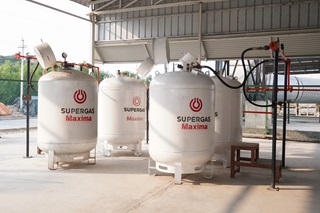
is stored in compact tanks. Advanced LPG installations, such as multi-cylinder cylinder
systems or bulk storage tanks, utilize automated monitoring to track
consumption in real-time.
By preventing stock-outs and automated delivery schedules, you reduce the administrative overhead and capital tied
up in excess fuel inventory and contamination.
4. Direct Process Acceleration
Due to LPG’s high calorific
values and intense heat capacity, the equipment can reach desired operating
temperatures much faster than traditional solid or heavy liquid fuels. The high
intensity of the LPG flame allows for rapid heat transfer.
Faster "heat-up" times
mean shorter batch cycles. For industries like foundries or industrial baking,
this translates directly into higher daily production volumes without
increasing the facility's footprint.
5. Regulatory Compliance and Carbon Footprint Reduction
As environmental regulations tighten, the cost of "being dirty"
is rising in the form of carbon taxes and compliance audits. LPG emits
significantly lower CO_2, NOx, and SOx compared to traditional fuels.
You avoid potential regulatory
fines and position your brand as a sustainable partner, which is increasingly a
requirement in the coming days.
In short, the
initial investment in an efficient LPG conversion is typically offset by the
lower Total Cost of Ownership (TCO), driven by fuel savings and increased
machine uptime.
But how to switch to LPG with less
downtime?
SUPERGAS does that for you,
through the seamless conversion assistance plan. We provide end-to-end support and LPG solutions
from initial assessment to site design and supply to maintenance.
We
also have a range of contractual options that allows you to choose what best suits you.
Call - 9121177930 | industrialsupport@supergas.com



 }
}
 }
}
 }
}
 }
}