Skip to content
Ceramic Industry

Superior Quality Ceramic Manufacturing

Upgrade to Cleaner, More Efficient Kiln Firing

Replace conventional oils with SUPERGAS LPG to achieve precise temperature control, reduced maintenance, and a cleaner, more sustainable production line for your ceramics.

Is LPG the most efficient fuel for ceramics?

Yes, LPG is widely considered one of the most efficient fuels for ceramic manufacturing. It provides clean, controllable, high-temperature heat during processes like drying, firing, and glazing.

It also reaches working temperatures fast, cutting energy use and speeding up production. With strong efficiency, lower emissions, and dependable heat, LPG helps ceramic manufacturers improve quality while keeping operations smooth and cost-effective.

Use our Carbon Calculator, to find our exactly how much you can save on fuel cost and CO2 emissions. 

LPG for Ceramics Manufacturing

How to Cut Fuel Costs in Ceramic Production?

It starts with choosing a right fuel and that decision goes far beyond the price per unit.

The real measure is calorific value: how much usable heat a fuel delivers. LPG offers a high calorific value of around 46 MJ/kg, which means more energy from every kilogram and faster, more consistent heating for your kilns and furnaces. Higher heat efficiency translates directly into lower fuel consumption.

But fuel cost is only part of the picture. Look at the overall cost of ownership, fuel efficiency, equipment maintenance, downtime, and product quality combined. When you weigh efficiency, cleanliness, and reliability together, LPG becomes the smarter, more cost-effective choice for ceramic manufacturing.

Once you've chosen the right fuel, it's just as important to pick an LPG supplier who acts as a true partner for your business.

Industrial LPG Maintenance and Safety Audits for Ceramic Plants

In ceramic manufacturing, LPG powers kilns, spray dryers, and roller hearth furnaces at high, continuous loads, so even small faults in the gas train can affect firing temperatures and product quality.

Periodic maintenance & safety audits keeps the LPG system dependable by checking regulators, vapouriser output, burner performance, and safety devices like excess-flow and relief valves on a fixed schedule.

Staff training is equally important. When your operators know how to handle LPG safely and respond to emergencies, your ceramic plant stays protected. 

Check out the key safety and compliance requirements for installing industrial LPG tanks.

                         Support Beyond Tank: SUPERGAS Care App

Managing your LPG needs shouldn't be stressful. Our SUPERGAS Care App puts control in your hand:

  • One-Click Ordering: Place refills instantly.
  • Track Deliveries: Know when your gas will arrive.
  • Technical Reports: Access all key reports and download to organise your documentation.
  • Safety Records: View your maintenance schedules and safety audit reports 24/7.

Click here to know more about the App!

Choose your Application

After shaping, ceramic wares are heated to temperatures between 900°C and 1100°C, to remove residual moisture and burn out organic binders. LPG’s clean burning ensures there is no soot or carbon residue deposited on the porous clay before glazing.
Once the bisque ware is glazed, it undergoes a second, higher-temperature firing, typically between 1050°C and 1280°C for impermeable, and decorative glass-like surface. LPG provides extremely precise atmosphere control to achieve glaze.
Before firing, raw ceramic products must be dried to remove moisture content. If moisture is removed too quickly, the product can crack or warp. LPG burners are used to provide gentle, uniform heat in drying chambers to gradually evaporate water.
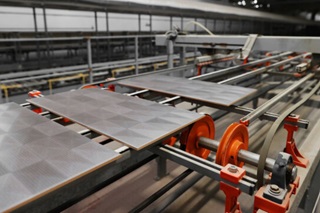
Ceramic production, especially in fast-fire roller kilns (which operate on cycles as short as 45 minutes), requires perfectly uniform heat distribution across the entire kiln cross-section.

Case Study

Case Study

High Quality Tiles production with LPG

A ceramic manufacturer producing 15,000 boxes of digital vitrified tiles daily successfully switched from Natural Gas to LPG. By partnering with SUPERGAS, they secured an uninterrupted, high-quality fuel supply and prioritized operational safety. This transition significantly improved their production consistency and efficiency.

Read full impact study here

Switching to SUPERGAS LPG from LDO reduced our fuel costs and maintenance while improving furnace efficiency and cleanliness, backed by reliable supply and excellent technical support.

Mudrika Ceramic India Private Limited

Vadodara, Gujarat

Commonly Asked

LPG offers superior thermal efficiency and lower operational costs. While per-unit pricing varies, LPG’s clean-burning properties eliminate soot, reducing burner maintenance, equipment downtime, and fuel wastage common with furnace oil.

We offer flexible models: our SGS (Supply & Gas System) provides a zero-investment infrastructure setup, while our Supply and P&S contracts offer tailored supply and maintenance solutions to optimize your kiln operations.

Know more about the contractual options

We strictly adhere to Petroleum and Explosives Safety Organisation (PESO) guidelines and Gas Cylinder Rules (2016). Our systems feature robust safety audits, periodic component testing, and specialized staff training for high-temperature environments.
LPG’s clean combustion significantly lowers pollutants like sulfur dioxide and particulate matter. Precise air-fuel ratio control at the burner further minimizes nitrogen oxide emissions, ensuring an eco-friendly and high-quality firing process.